Peptide Research Reference 126 articles · 4 batch records

Retatrutide & GLP-1 Peptide Research

An independent reference for retatrutide and the wider incretin literature — GLP-1, GIP and glucagon. Trial evidence, approval-status tracking, COA and HPLC verification methodology, and laboratory calculators. For in-vitro laboratory research use only.

For Research Use Only
99.26–99.84% HPLCArchived Batch Range
126 ArticlesCited Research Library
Research Use OnlyIn-Vitro Laboratory Context
Janoshik ReportsThird-Party Analytics
Contact VerifyOfficial Routes

Third-Party Tested.
Still Checkable.

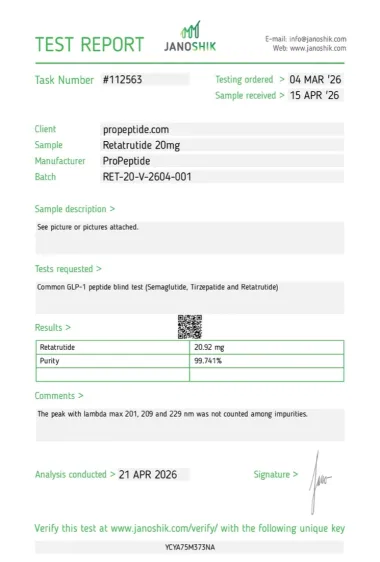
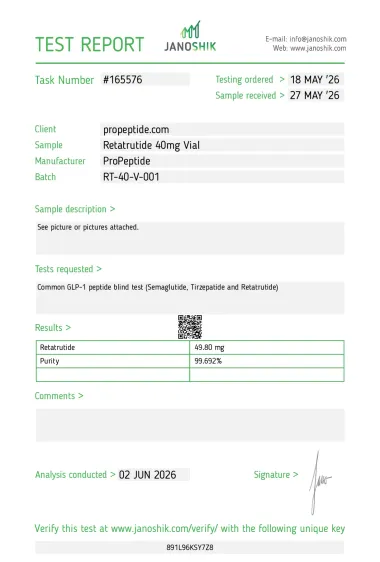
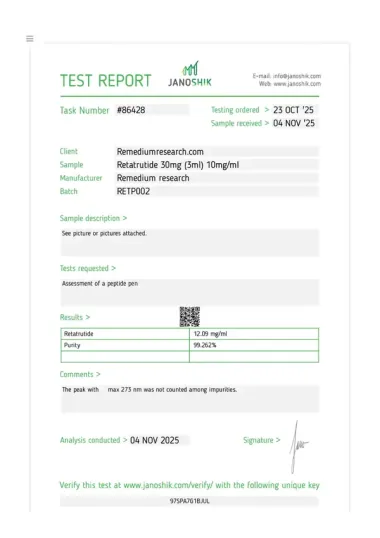
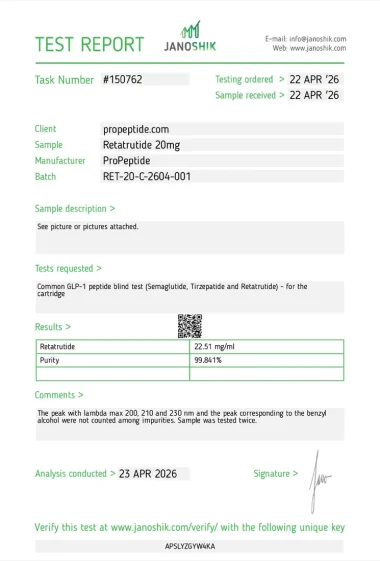
These are archived third-party analytical records, published so that every purity figure cited across this site stays traceable to its source report. Each batch was tested by Janoshik Analytical, an independent laboratory specialising in peptide purity analysis. Remy Peptides no longer supplies research materials — the reports remain online as reference. Four flagship reports below; the full set sits in the COA archive.
Full record set: the batch record index, the Janoshik verification walkthrough, the HPLC purity guide, and the retatrutide format and evidence overview.

Four checks. Any report.

01

Match the identifiers

The report should name the compound, the batch or lot number, and the test date — and all three should match the material the report is being used to describe. A report with no batch number, or a batch that does not appear anywhere else, documents nothing.
02

Confirm the laboratory

Identify who ran the analysis, not who commissioned it. Janoshik reports carry a task ID and a verification key; both belong on the face of the document. An unnamed lab, a cropped header, or a missing task ID means the result cannot be traced.
03

Read the whole panel

HPLC purity is one line. Check what else was measured — peptide content or assay, endotoxin, heavy metals, residual TFA, and for vials the sterility panel. A high purity figure alongside an empty panel is a narrower claim than it looks.
04

Re-verify at source

Take the task ID and verification key back to the laboratory's own record rather than trusting the copy in front of you. Step-by-step: how to verify a Janoshik COA, and how to read HPLC purity.

Three receptors.
One compound.

Retatrutide is an investigational peptide and triple hormone receptor agonist studied in metabolic research — it acts on three hormone pathways at once. Retatrutide targets three receptors—GLP-1, GIP, and glucagon—and this triple receptor mechanism is what sets it apart in the incretin literature, while it remains in Phase 3 clinical trials. Every batch figure cited on this site comes from an independent Janoshik report published in the COA archive, all above 99% HPLC purity. For receptor-pathway details, trial references, and compound comparisons, read the full research comparison or the GLP-1, GIP and glucagon mechanism explainer.

01 —

Glucagon-Like Peptide

GLP-1 Receptor
One of the receptor pathways covered in published incretin research. The same receptor family appears across semaglutide and liraglutide literature; retatrutide research examines it alongside GIP and glucagon receptor activity.
02 —

Glucose-Dependent Insulinotropic

GIP Receptor
Glucose-dependent insulinotropic polypeptide receptor pathway. Retatrutide research examines GIP activity as part of a triple-agonist profile, alongside GLP-1 and glucagon receptor literature, including how it may influence insulin response, improved insulin sensitivity, and insulin sensitivity in adipose tissue within broader metabolic processes.
03 —

Glucagon Receptor

GCGR Receptor
The differentiator in the triple-agonist model. Published research discusses glucagon receptor co-activation as the added pathway that separates retatrutide from GLP-1-only and dual-agonist compounds. Activity at glucagon receptors is linked to energy expenditure and fat metabolism, broader metabolic regulation, and access to stored energy that may increase fat burning; glucagon-pathway activity is also studied for effects on metabolic rate and visceral fat.
99.841%
Highest Published
Retatrutide HPLC purity
COA Result
3×
Receptor Pathways
Simultaneously
Activated
4
Published Batch
Records In The
COA Archive

Prefilled Pens and Lyophilized Vials. Different Handling Maths.

Most retatrutide literature and batch documentation describes one of two physical presentations: solution-state material in a prefilled click-indexed cartridge, or lyophilized powder in a sealed vial. The compound is the same; what changes is the handling chain, the arithmetic a lab has to do, and which analytical panels the batch report can carry. Third-party batch data is what makes either presentation checkable.

Solution state
Prefilled Pens

Pre-formulated cartridges that arrive already in solution, dispensed in fixed mechanical increments rather than drawn by volume.

  • No reconstitution step and no diluent volume to record
  • Click-indexed scale — the increment is fixed by the device, so calibration replaces volumetric measurement
  • Already in solution, so the stability clock starts before the cartridge is opened
  • Click-to-milligram conversion tables: pen clicks guide and the pen calculator
Lyophilized
Lyophilized Vials

Freeze-dried powder that stays dry until the lab adds diluent, which means the working concentration is decided in the lab rather than at the filling line.

  • Requires reconstitution, so diluent choice and volume become recorded variables: bacteriostatic water guide
  • Volumetric measurement — concentration maths done per vial: reconstitution calculator
  • Dry storage before reconstitution, with a separate and much shorter in-solution stability window afterwards
  • Sealed sterile presentation, so batch reports can carry endotoxin and sterility panels
Batch evidence
What the Reports Cover

The presentation changes which analytical panels are meaningful, so a like-for-like purity comparison between a pen batch and a vial batch is not a like-for-like comparison of evidence.

  • HPLC purity is reported for both presentations
  • Sterility and endotoxin appear on the vial line — see RT-40-V-001
  • Published HPLC values by batch, presentation and test date in the COA archive
  • For in-vitro laboratory research only

Compound Profiles

Mechanism-level reference profiles for the peptides most often researched alongside the incretin compounds — each one opening its cited research article.

Working from a published protocol?
Convert click increments to milligrams, or work reconstitution volumes back to a concentration, for documented in-vitro protocols. Not dosing, administration, or human-use guidance.
Open the research calculator →

Frequently Asked

What is retatrutide?
Retatrutide (research code LY3437943) is an investigational triple-agonist peptide discussed in GLP-1, GIP, and glucagon receptor literature. Across metabolic and obesity research it is studied at three receptor pathways for effects on insulin sensitivity, appetite regulation, and energy balance. It is not an approved medicine anywhere, and nothing on this site is offered for human or veterinary use. For receptor-pathway detail and trial references, read the research comparison or the GLP-1, GIP and glucagon mechanism explainer.
Is retatrutide approved in the UAE?
No. Retatrutide is investigational worldwide and not approved as a medicine for general patient use in the UAE or elsewhere. Outside clinical trials, any product sold as retatrutide is unregulated, and unsupervised use carries health risks. This site publishes research reference material only. For the current regulatory picture, see retatrutide approval status.
How do retatrutide trial outcomes compare to semaglutide?
In clinical research, retatrutide has shown some of the largest body-weight reductions recorded for a metabolic compound. The Phase 2 trial (NEJM 2023) reported up to 24.2% mean body-weight reduction at 48 weeks on 12 mg, and Phase 3 TRIUMPH readouts have since reported roughly 28% (28.3% at 80 weeks in TRIUMPH-1; 28.7% in TRIUMPH-4). By comparison, semaglutide produced about 15% body-weight reduction in STEP 1. These are published trial outcomes for an investigational compound, reported here as literature rather than as claims about any product. For the full comparison, read retatrutide vs tirzepatide vs cagrisema.
What side effects are reported in the trials?
In clinical studies of retatrutide, nausea is the most commonly reported side effect, and gastrointestinal symptoms can appear during early dose titration. Reported effects can involve the gastrointestinal system, including changes in bowel habits, while incretin-related activity under study may also affect gastric emptying; injection-site reactions are generally mild and transient. Investigators also note reduced appetite during early use. These are clinical-trial observations recorded in the literature, not guidance for use. See retatrutide approval status for trial context.
What does a published HPLC purity figure actually mean?
An HPLC purity figure states how much of the analysed sample was the target peptide, as measured by high-performance liquid chromatography against the laboratory's own method. It says nothing about sterility, endotoxin load, residual solvent, or peptide content per unit unless those panels were run and published too — which is why the vial batches in this archive carry additional panels. The HPLC purity guide explains how to read a chromatogram and what each number does and does not cover.
How can I verify the Janoshik reports published here?
Every archived batch page reproduces the report itself alongside the batch number, the test date and the issuing laboratory, so each figure can be traced to its source: the COA archive and the batch record index. Janoshik reports also carry a task ID and verification key that can be checked against the laboratory's own record. The step-by-step method is in how to verify a Janoshik COA.
How should research peptides be stored and handled?
Published handling guidance for lyophilized material is refrigerated or frozen storage, protection from light, and reconstitution only within a validated workflow; solution-state material is generally held at 2–8°C and not frozen. Laboratory handling should follow your own SOP and the documentation supplied with the material. See the peptide stability and storage guide and the peptide handling reference.
Why is everything on this site labelled For Research Use Only?
Remy Peptides publishes reference material about peptides that are investigational or not approved for the uses discussed. The research-use framing marks that boundary: the content is written for laboratory and literature context, and it is not medical advice, dosing guidance, or an offer of any material for human or veterinary use. Editorial standards are published at research standards and editorial policy.
View all questions →

Wrong figure? Tell us.

If a citation, batch figure, trial number, or approval status on this site looks wrong or out of date, write to info@remypeptides.com and point at the page — corrections are made against the source, not the summary. How claims are sourced and reviewed is documented in our research standards and editorial policy. Nothing here is medical, dosing, or human-use guidance: any clinical question belongs with a qualified healthcare professional, and approved medicines are dispensed by licensed pharmacies.

Remy Research

Visit Remy Research, our separately operated sister site. Its lab-results library provides additional batch reports to read alongside the research and archived certificates published here. Remy Peptides remains an informational site with research calculators; it does not sell items or accept orders.

Start With the Evidence

Browse 126 research articles → Open the calculator →
Third-Party COAs Published Every Claim Sourced Research Use Only