How to Reconstitute Peptides with Bacteriostatic Water
A research-first, step-by-step guide to peptide reconstitution: bacteriostatic water vs sterile water, sterile handling, concentration math, storage rules, and the exact workflow for lyophilised compounds.
Update History ▾
April 28, 2026: Expanded the benzyl alcohol mechanism, added solvent-compatibility notes (saline, acetate-salt, acetic acid), refined storage labelling guidance, and tightened FAQ wording
April 14, 2026: Reframed around how-to-reconstitute-peptides intent, added HD workflow diagrams, refreshed FAQ wording, and updated storage guidance
Initial publication
To reconstitute peptides, use a sterile technique, add the correct volume of bacteriostatic water slowly down the vial wall, and swirl gently until the powder fully dissolves. Bacteriostatic water contains 0.9% benzyl alcohol, which is why it is usually preferred for multi-dose peptide vials. Do not shake the vial, keep the finished solution refrigerated at 2–8°C, and date any multidose diluent vial when first punctured. For concentration math, use our peptide reconstitution calculator.
Format note: bacteriostatic water is a separate consumable from the peptide itself and is required to reconstitute lyophilised research vials. It is commonly stocked in an 11mL vial for routine reconstitution and a 40mL vial for multi-vial workflows; both carry 0.9% benzyl alcohol as the preservative.
New to peptides? Start with our beginner's guide to peptides for a foundation on types, mechanisms, and research basics before diving into reconstitution.
Peptide Reconstitution Stability Guidelines: Using Bacteriostatic Water for Peptides
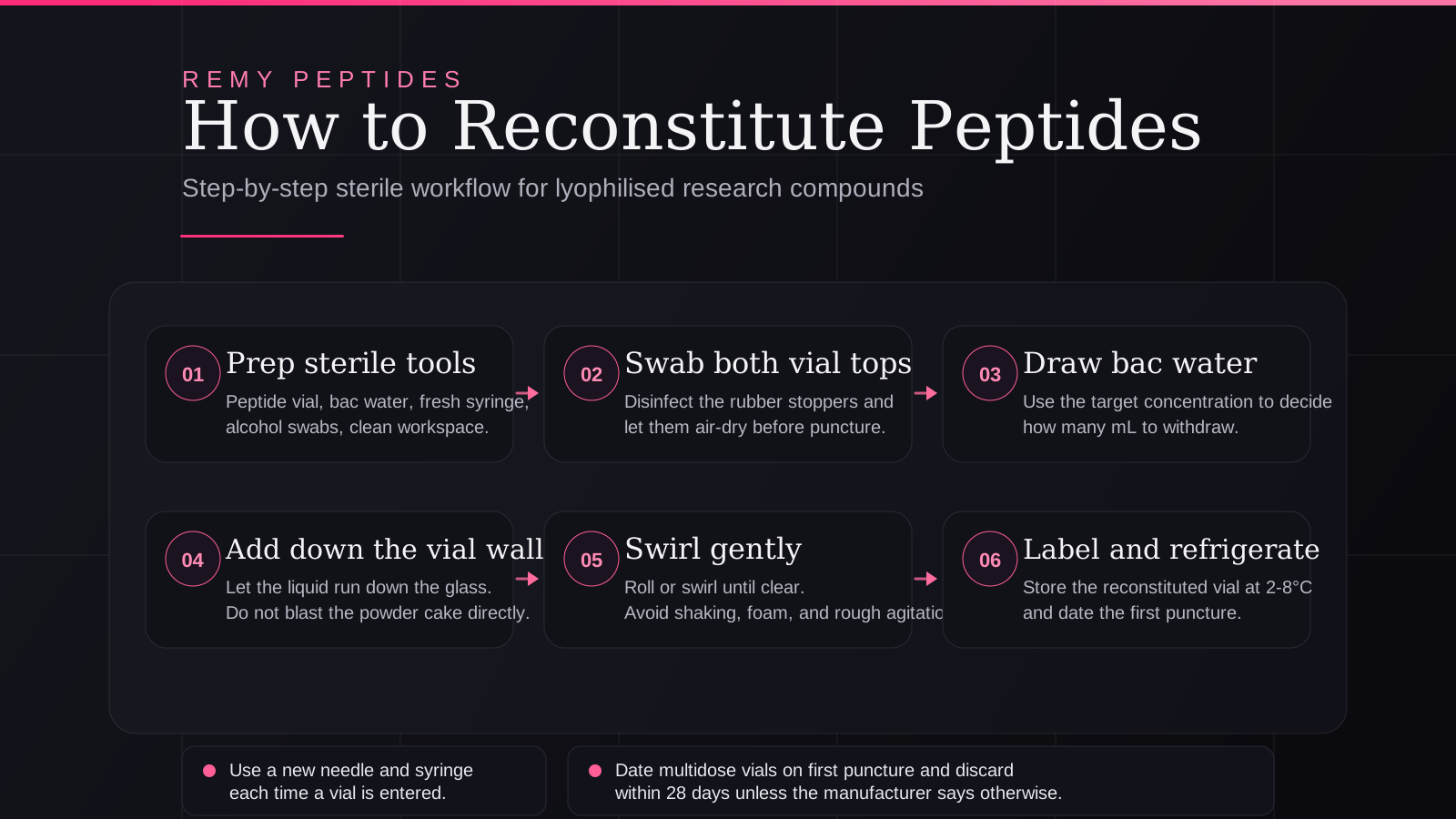
Start with the workflow before you touch the vial. The first diagram shows the sterile sequence. The second turns the concentration math into a fast visual reference so you can decide the right water volume before you draw anything.
What Do You Use to Reconstitute Peptides?
Bacteriostatic water (often shortened to “bac water”) is sterile water for injection that contains 0.9% benzyl alcohol (9 mg/mL) as a bacteriostatic preservative.[1] Benzyl alcohol disrupts the cell membranes of microorganisms, which prevents bacteria from reproducing and causes cellular contents to leak out. It does not kill bacteria already present—it inhibits their multiplication—which is why the water must start sterile. This is what extends the usable life of a punctured multidose vial up to 28 days when handled properly.
This preservative action is what separates bacteriostatic water from plain sterile water for injection. Once a sterile water vial is punctured, there is no preservative present to suppress bacterial colonisation, so contamination risk rises with every draw. A bacteriostatic water vial, by contrast, can be punctured multiple times over a defined period because the benzyl alcohol continuously suppresses microbial proliferation. In practice, multidose vial handling guidance commonly uses a 28-day dating rule unless the manufacturer specifies otherwise.[5]
Bacteriostatic water is manufactured to United States Pharmacopeia (USP) standards. The USP monograph specifies the benzyl alcohol concentration, sterility requirements, endotoxin limits, and pH range (4.5–7.0).[1] When purchasing bacteriostatic water for peptide research, USP-grade compliance is a non-negotiable baseline.
Key Properties
- Preservative: 0.9% benzyl alcohol (w/v)
- Sterility: Must pass USP sterility testing at manufacture
- pH range: 4.5–7.0
- Multi-use: Up to 28 days after first puncture
- Route: Suitable for subcutaneous and intramuscular research applications
- Packaging: Typically available in 10 mL, 20 mL, and 30 mL glass vials
Bacteriostatic Water vs Sterile Water — Comparison
The distinction between bacteriostatic water and sterile water for injection is one of the most common sources of confusion in peptide reconstitution. Both are sterile at manufacture, but their intended use cases differ significantly.
| Property | Bacteriostatic Water | Sterile Water for Injection |
|---|---|---|
| Preservative | 0.9% benzyl alcohol | None |
| Multi-dose use | Yes (up to 28 days) | No — single use only |
| Shelf life after opening | 28 days | Immediate use, then discard |
| Bacterial inhibition | Active (benzyl alcohol) | None |
| Best for | Multi-dose peptide vials | Single-use preparations |
| Cost efficiency | Higher — one vial serves many doses | Lower — one vial per use |
| USP standard | USP Bacteriostatic Water | USP Sterile Water for Injection |
Normal saline (0.9% sodium chloride) is another common reconstitution solvent. It is isotonic and compatible with some peptide salts, but should not be used with peptides supplied in acetate-salt form, where the chloride can cause precipitation. A small group of peptides—oxytocin, vasopressin, hCG—are sensitive to benzyl alcohol and require preservative-free sterile water for stability. For broader solvent compatibility considerations across blends and stacks, see our peptide interactions and mixing guide.
Bottom line: If the reconstituted peptide solution will be drawn from more than once, bacteriostatic water is the correct choice. Sterile water for injection is appropriate only when the entire reconstituted volume will be used in a single session, or when the specific peptide is preservative-sensitive.
How to Reconstitute Peptides Step by Step
Reconstitution is the process of dissolving a lyophilised (freeze-dried) peptide powder into a liquid solution using bacteriostatic water. Proper technique is critical for preserving peptide integrity and ensuring accurate dosing. Aseptic, sterile technique throughout the workflow is what keeps the multidose vial usable across the full discard window. Follow this step-by-step protocol:
Step 1 — Prepare Your Materials
Gather the lyophilised peptide vial, a vial of USP-grade bacteriostatic water, alcohol swabs, and an appropriately sized syringe (typically an insulin syringe or a 1–3 mL syringe with a 25–29 gauge needle). Ensure a clean workspace.
Step 2 — Swab Both Vial Tops
Use an alcohol swab to clean the rubber stopper on both the bacteriostatic water vial and the peptide vial. Allow each to air-dry for 10–15 seconds. This step reduces the risk of introducing contaminants through the needle puncture.
Step 3 — Draw the Bacteriostatic Water
Insert the syringe into the bacteriostatic water vial and draw the desired volume. The volume depends on your target concentration—see our reconstitution calculator for exact amounts. Common example: adding 2 mL of bac water to a 10 mg peptide yields 5 mg/mL (5000 mcg/mL).
Step 4 — Inject Along the Vial Wall
Insert the needle into the peptide vial and slowly dispense the bacteriostatic water down the inside wall of the vial. Do not inject directly onto the lyophilised powder cake. Directing the stream against the glass wall prevents the force of the liquid from damaging the peptide structure.
Step 5 — Swirl, Do Not Shake
Once the water is added, gently swirl the vial in a circular motion. Never shake a peptide vial. Vigorous shaking introduces mechanical stress and foam, both of which can shear peptide chains and accelerate denaturation, reducing potency.[6] The powder should fully dissolve within 1–3 minutes of gentle swirling. If any particulates remain, let the vial sit at room temperature for 5–10 minutes, then swirl again until you reach complete dissolution.
Step 6 — Verify and Store
Visual inspection is essential. The reconstituted solution should be clear and free of visible particles. Cloudiness or particulates may indicate degradation or contamination—discard and start fresh. Once dissolved, store the reconstituted vial in a refrigerator at 2–8°C and protect it from light. For detailed storage guidelines, see our peptide stability and storage guide.
Concentration Calculator — Get the Right Ratio
The amount of bacteriostatic water you add determines the concentration of the reconstituted peptide solution, which in turn determines how much liquid you draw for each dose. Getting this calculation wrong means inaccurate dosing throughout the entire vial.
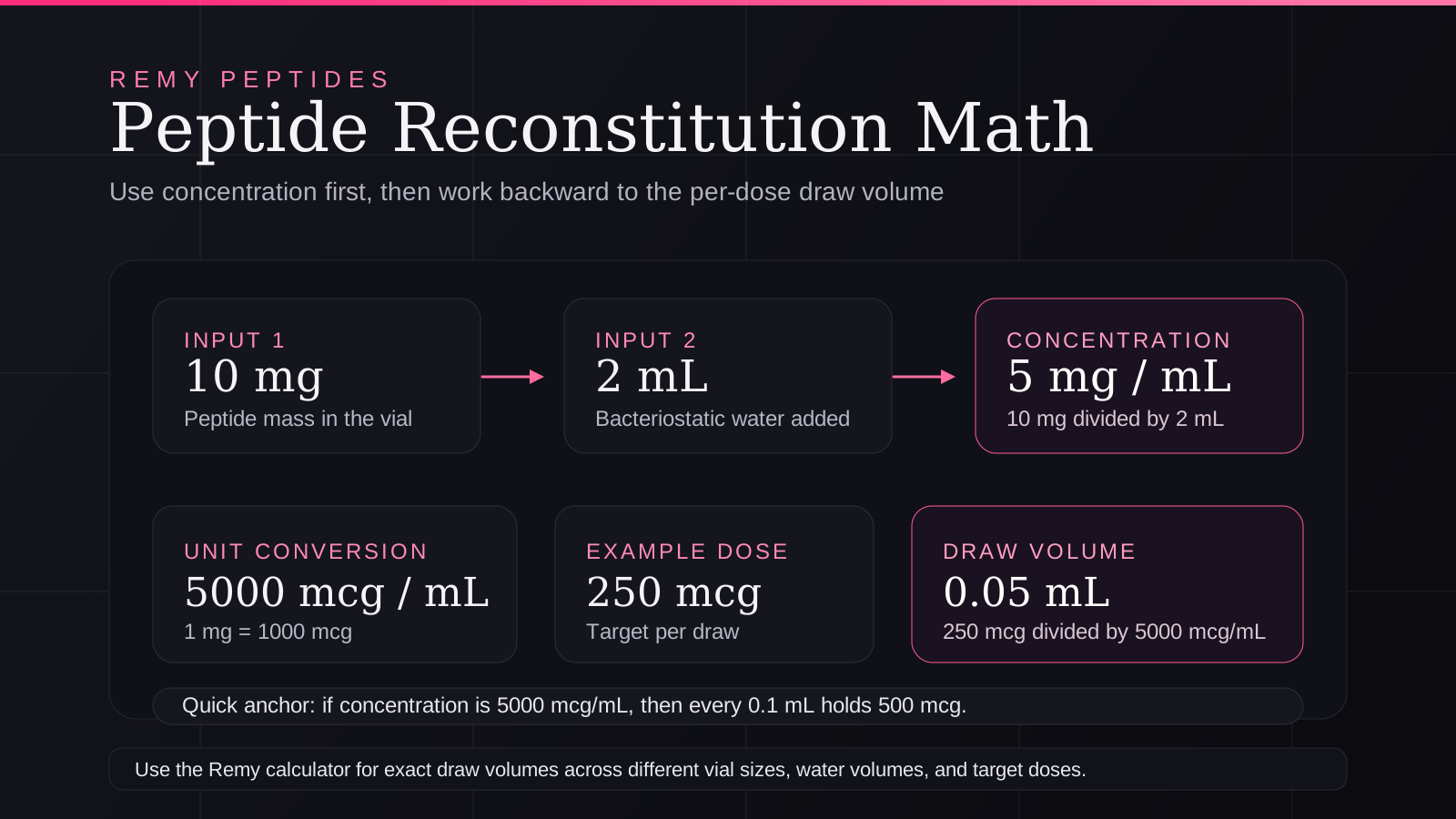
Our peptide reconstitution calculator handles this automatically. Enter the peptide mass (mg), the volume of bac water you plan to add (mL), and your target dose (mcg)—the calculator returns the exact syringe volume per dose. The optimal concentration varies by peptide; some compounds tolerate a wide range, others have a narrow stable window, so always check compound-specific guidance before locking in a dilution ratio. For lyophilised retatrutide vials, the available 10 mg and 40 mg retatrutide formats list the per-vial mass to plug into the math above.
Quick Reference Examples
| Peptide | Bac Water Added | Concentration | 0.5 mg Dose |
|---|---|---|---|
| 5 mg vial | 1 mL | 5 mg/mL | 10 units (0.10 mL) |
| 5 mg vial | 2 mL | 2.5 mg/mL | 20 units (0.20 mL) |
| 10 mg vial | 2 mL | 5 mg/mL | 10 units (0.10 mL) |
| 10 mg vial | 3 mL | 3.33 mg/mL | 15 units (0.15 mL) |
For precision across any peptide mass and water volume, always use the calculator rather than manual arithmetic.
Storage Requirements for Bacteriostatic Water
Proper storage of bacteriostatic water—both before and after opening—directly affects whether the preservative system functions as intended.
Unopened Vials
- Temperature: Store at controlled room temperature, 20–25°C (68–77°F)
- Light: Protect from direct light; store in original packaging or a dark cabinet
- Expiry: Follow the manufacturer’s printed expiration date
- Refrigeration: Not required for unopened vials
Opened (Punctured) Vials
- 28-day rule: Once the rubber stopper is punctured, date the vial and use within 28 days unless the manufacturer specifies a shorter or longer period[2]
- Temperature: Room temperature remains acceptable; refrigeration is optional for the diluent itself
- Label the date: Mark the vial with the date of first puncture and the reconstitution date—tracking both is essential for monitoring shelf life. Do not rely on memory.
- Discard after 28 days: Even if volume remains, the preservative system can no longer guarantee sterility beyond this window
Reconstituted Peptide Solutions
Once bacteriostatic water has been added to a lyophilised peptide, the resulting solution should be refrigerated at 2–8°C. The storage rules shift from the bac water’s 28-day limit to the peptide’s own stability profile. Most reconstituted peptides remain stable for 14–28 days when refrigerated, though this varies by compound. See our peptide stability and storage guide for compound-specific timelines.
Quality Markers — What to Look For
Not all bacteriostatic water products are equivalent. When selecting a bac water source for peptide reconstitution, verify the following quality markers:
- USP-grade certification: The product should explicitly state compliance with the United States Pharmacopeia monograph for Bacteriostatic Water for Injection. This is the gold standard for pharmaceutical-grade diluents. For background on what a peptide COA actually verifies, see our COA and HPLC purity guide.
- Benzyl alcohol concentration: Confirm the label states 0.9% benzyl alcohol (w/v). Lower concentrations may not adequately inhibit bacterial growth. Higher concentrations are non-standard and may interfere with sensitive peptides.
- Sterility testing: The manufacturer should perform and document sterility testing per USP <71>.[3] Ask for or verify that a Certificate of Analysis (COA) accompanies each lot.
- Endotoxin testing: USP <85> bacterial endotoxin testing should be performed. Endotoxins are heat-stable lipopolysaccharides from gram-negative bacteria that can remain even in sterile solutions.
- Lot tracking: Each vial should carry a visible lot number that maps to specific manufacturing and testing records. This enables traceability if any quality issue arises—our Janoshik COA verification walkthrough shows the same checks applied to peptide lots.
- Packaging integrity: Glass vials with intact rubber stoppers and aluminium crimp seals. Avoid any product where the crimp seal shows signs of tampering or the stopper has been previously punctured.
Some products, such as bacteriostatic saline, contain both sodium chloride and benzyl alcohol. These are not interchangeable with bacteriostatic water for every peptide—the chloride can interact with acetate-salt forms and trigger precipitation. For peptides that resist dissolving in water, dilute acetic acid is sometimes used as an alternative solvent, but compatibility should always be confirmed against the specific compound before use.
If a supplier cannot provide documentation for sterility testing and benzyl alcohol concentration, source elsewhere. The cost difference between certified and uncertified bac water is negligible; the risk difference is substantial.
Evaluating Bacteriostatic Water Documentation
Bacteriostatic water is a separate consumable from lyophilised research material. Format alone does not establish quality: the vial label, manufacturer records, lot number, sterility documentation, benzyl alcohol concentration, expiry date, and packaging integrity should agree.
Lot-Level Checks
Record the manufacturer, lot number, date of first puncture, and labelled storage conditions. A certificate should identify the same lot shown on the vial and document the applicable sterility and endotoxin tests. A generic certificate without a matching lot number is not batch-specific evidence.
Packaging and Handling
Do not use a vial with a damaged crimp, punctured stopper, missing lot number, visible particulate matter, or unclear storage history. The labelled expiry date applies before opening; after first puncture, follow the manufacturer’s beyond-use instructions and the handling limits described above.
Scope of the Evidence
Documentation can support identity, concentration, sterility testing, and traceability. It cannot establish that a particular diluent is compatible with every compound or protocol. Compatibility and stability remain compound-specific questions.
Our Research Standards
This article cites USP pharmacopeia standards, CDC multidose-vial dating guidance, sterility testing protocols, and established reconstitution best practices. All claims are cross-referenced against primary sources. We update articles when new guidance or regulatory decisions are published. Read our editorial policy →
Sources
- United States Pharmacopeia (USP). Bacteriostatic Water for Injection Monograph. USP–NF. usp.org ↩
- USP General Chapter <797> Pharmaceutical Compounding — Sterile Preparations. Beyond-use dating guidelines. usp.org/compounding ↩
- USP General Chapter <71> Sterility Tests. usp.org ↩
- USP General Chapter <85> Bacterial Endotoxins Test. usp.org
- Centers for Disease Control and Prevention. Standard Precautions: date multidose vials when first opened and discard within 28 days unless the manufacturer specifies otherwise. cdc.gov ↩
- Manning MC, Chou DK, Murphy BM, et al. Stability of Protein Pharmaceuticals: An Update. Pharm Res. 2010;27(4):544–575. PMID: 20143256. doi: 10.1007/s11095-009-0045-6. ↩
- Wang W. Instability, stabilization, and formulation of liquid protein pharmaceuticals. Int J Pharm. 1999;185(2):129–188. PMID: 10460913. doi: 10.1016/S0378-5173(99)00152-0.