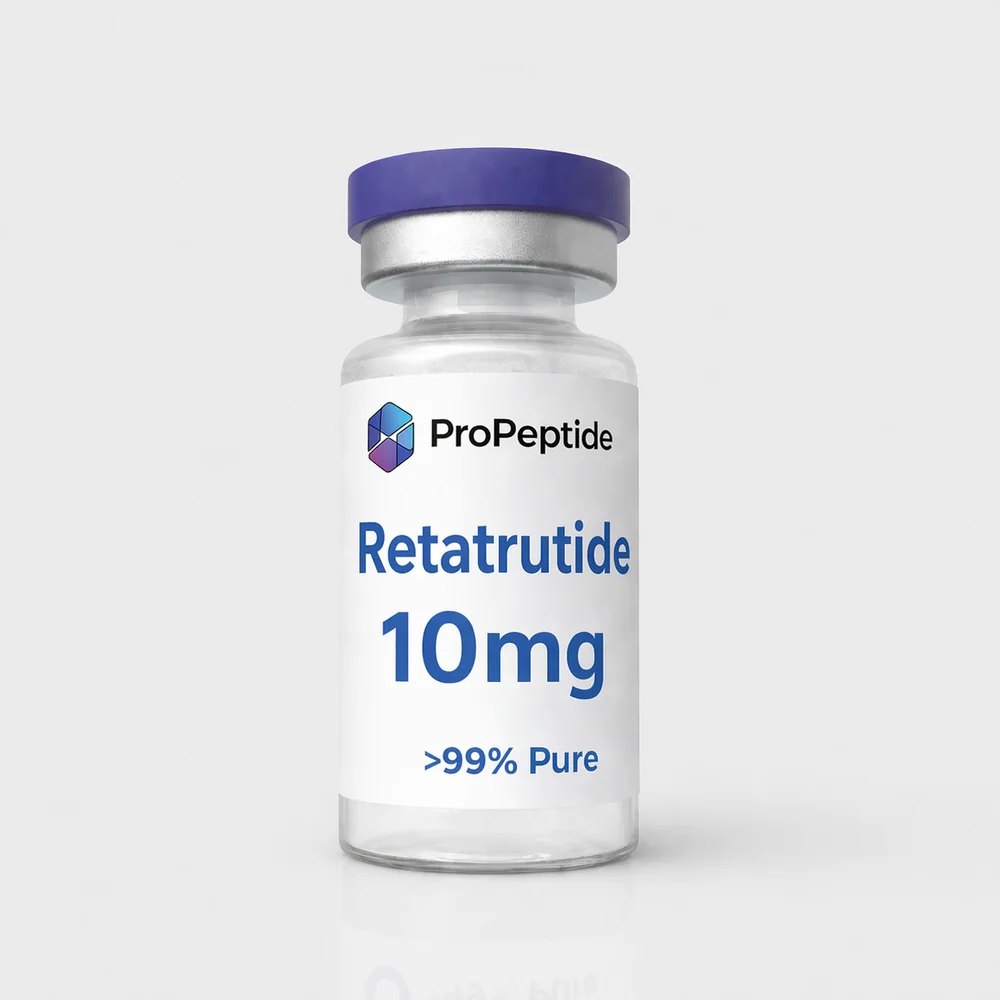
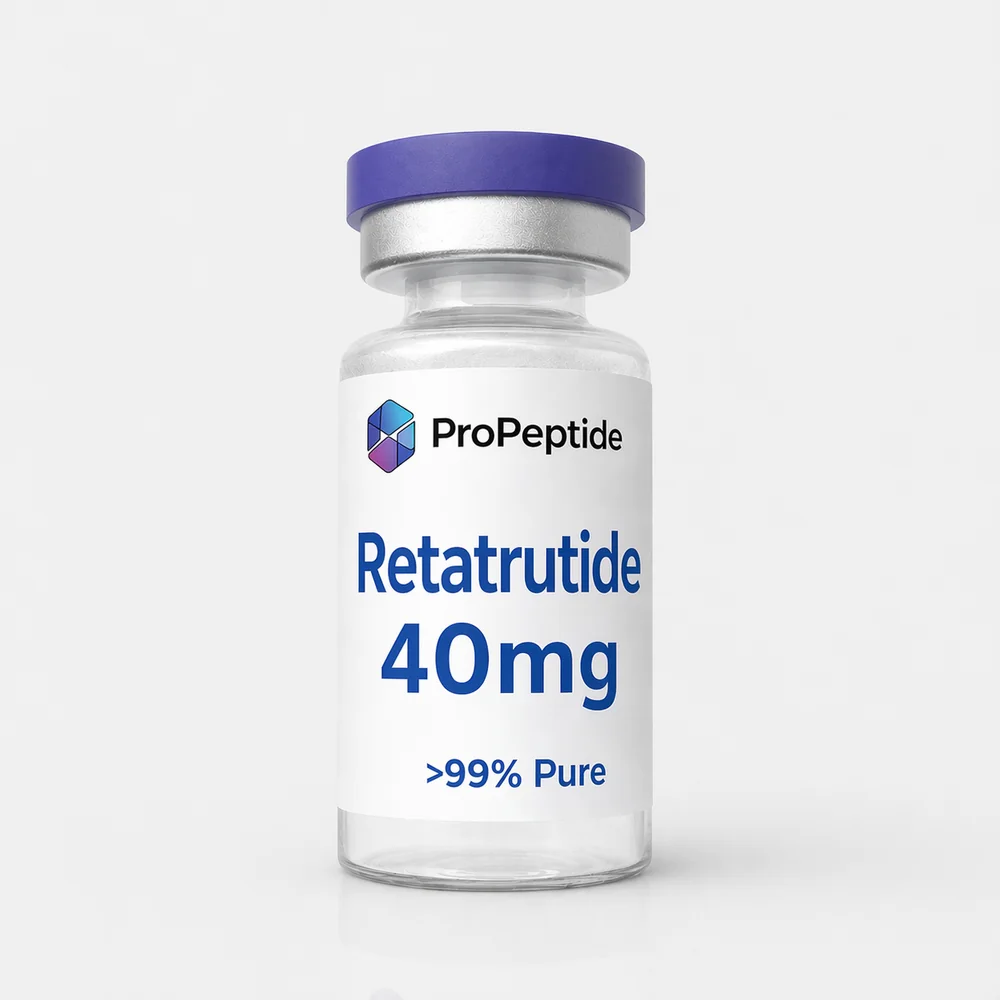
When teams review retatrutide for metabolic research, the practical questions usually center on published adverse-event patterns, concurrent compound considerations, and storage discipline. As a triple-agonist peptide developed by Eli Lilly, retatrutide targets GLP-1, GIP, and glucagon receptors simultaneously, which is why it is tracked separately from single-pathway and dual-pathway compounds.
Side Effects
Clinical trials of retatrutide have reported gastrointestinal symptoms such as nausea, diarrhoea, and occasional vomiting most often during dose escalation. Published summaries generally describe those events as mild to moderate. Following the published dosing guidance and titration rules helps keep those observations in the right protocol context.
Interactions
Because retatrutide influences glucose metabolism through GLP-1, GIP, and glucagon receptor activity, it may interact with other compounds that affect glycaemic control or appetite signalling. Research teams should document concurrent compounds carefully so those variables are visible in protocol analysis.
Storage & Handling
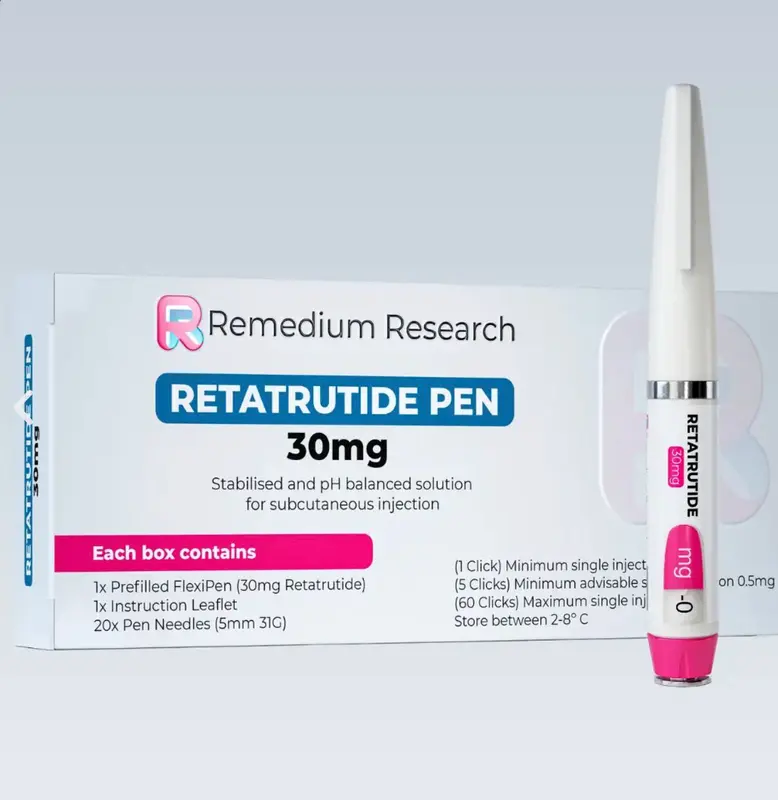
Proper storage remains central to reliable handling. The prefilled pen should be kept refrigerated at 2–8°C, protected from light, and never frozen. Remy Peptides provides UAE fulfilment support, and each batch includes Janoshik Analytical documentation for ≥99.2% purity.
Research Use Only
It is important to note that retatrutide is still undergoing clinical trials and is not approved for human consumption. All products are supplied strictly for research purposes, and researchers should follow established protocols and safety guidelines when handling peptides in the laboratory.
Retatrutide's three-receptor mechanism is the reason it remains one of the most closely watched compounds in the metabolic pipeline. The published Phase 2 dataset reported strong weight-change and glycaemic signals, but the compound remains investigational and should be read through trial data, protocol rules, and storage discipline rather than marketing language. Use the dosage calculator for protocol planning.